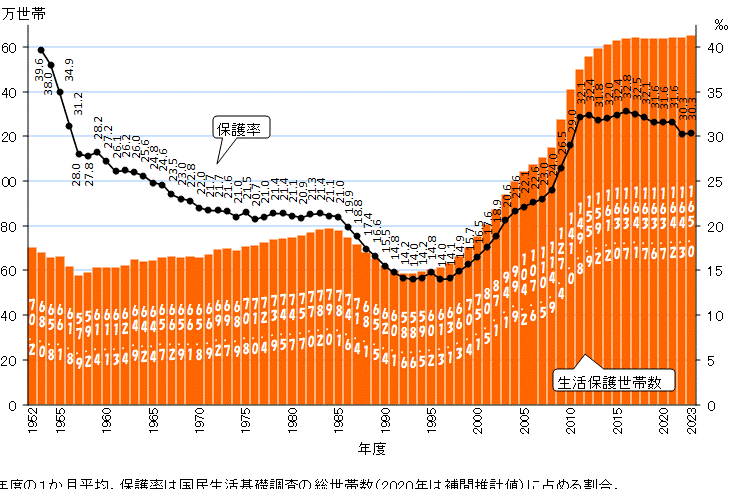
This generational analysis provides insight into how the characteristics and needs of welfare recipients can vary greatly across age groups. By understanding these differences, we can better tailor our policies and support systems to meet the unique challenges faced by each demographic within Japan’s social safety net.
This table illustrates that the number of welfare recipients increased notably following the 2020 policy measures aimed at mitigating the pandemic’s impacts. The continuous adjustments to the system reflect ongoing efforts to address changing economic conditions and societal needs.
The evolution of welfare policies has thus played a crucial role in shaping the landscape of welfare recipients in Japan. By analyzing these changes, we can gain insights into how future reforms might continue to influence our society’s most vulnerable populations.
This multifaceted approach is crucial for addressing the complexities surrounding the welfare system. Alleviating these challenges will not only enhance the effectiveness of support provided to welfare recipients but also strengthen societal cohesion overall.
年度
予測される生活保護受給者数(人)
2025年
1,500,000
<
tr >
2030年
< / td >
1 ,600 ,000
< / td >
< / tr >
This table highlights our projections regarding future changes in the number of welfare recipients based on current trends and demographic shifts. By preparing for these changes, we can better equip ourselves to develop responsive policies that meet the needs of those who rely on this critical system.